Community, Resiliency, and Collaboration
By Gina Tangorra, Director of Engagement, Newport Restoration Foundation
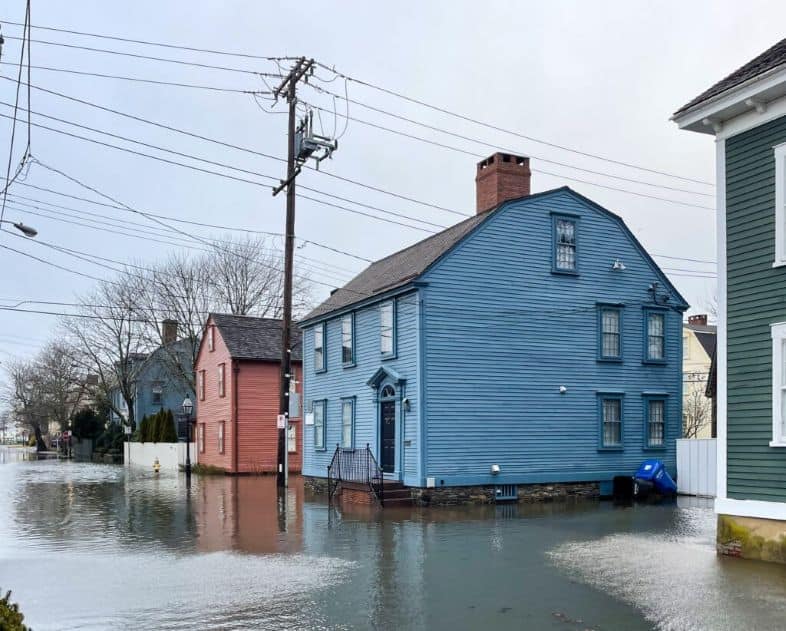
Ten years ago, the Newport Restoration Foundation (NRF) was facing a challenge: many of the historic properties we stewarded were vulnerable to the impacts of sea-level rise. This was not a hypothetical future threat—we were seeing flooding in real time in our historic houses, particularly in the historic Point neighborhood. NRF started Keeping History Above Water as a conversation between historic preservationists, city planners, and community members to address the increasing impacts of climate change on our architectural and cultural history. In the decade since, these conversations have not only remained relevant but also have led to action plans to address these threats.
As a steward of more than 80 historic sites and landscapes, we are in an unique position to serve our community and share resources and expertise. This year, we celebrated ten years of resiliency in the wake of climate change through a series of public programs, installations, and a special symposium held in October. We’ve partnered with other coastal communities to bring Keeping History Above Water to a national audience, and this year, we were excited to bring the symposium back home to Newport, where it began.
Keeping History Above Water: Looking Back, Moving Forward explored the theme of addressing the impact of sea-level rise, increasing damaging storms, and inundation events on cultural heritage and featured representatives from World Monuments Fund, Stone Living Lab, Strawbery Banke Museum, the Tulane School of Architecture and Built Environment, and the National Trust for Historic Preservation. In addition to talks and panel presentations, attendees participated in hands-on workshops and site demonstrations across Newport.
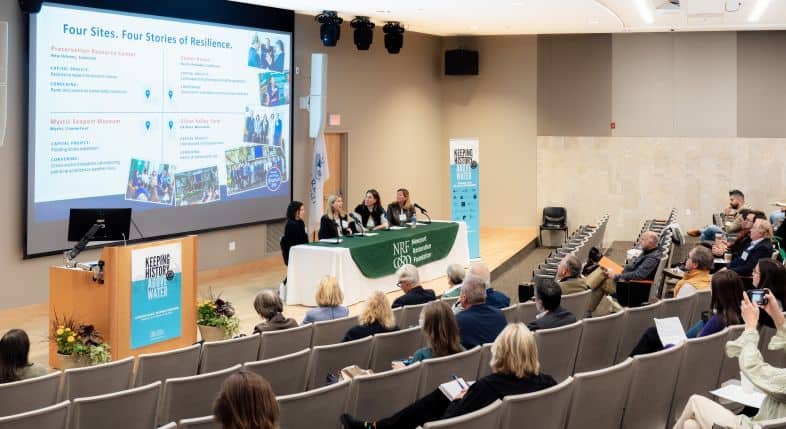
While the subject matter is serious and highlights real threats we are facing as a community, I came away from the symposium with a renewed sense of hope and purpose. One of the important lessons we have learned this past decade is that there is real power in collaboration.
Convenings like this one give us an opportunity to gather together and learn from each other and make an impact on the future of our communities.
And speaking of collaboration, NRF and Bike Newport partnered on a guided bike tour exploring resiliency on the Saturday following the symposium. The tour visited historic sites under the care of NRF in the Point and Historic Hill neighborhoods and saw resiliency work in action, including how NRF and the City of Newport are planning for a more resilient future.
This was a fantastic opportunity for both non-profits to come together for a program that supports our work helping make our communities more sustainable, resilient, and livable. If you weren’t able to join us on this Fall, be on the look out for future tours!
Although the year is winding down, there are still plenty of opportunities to engage with the topic of climate change resiliency and history. You can visit our special Keeping History Above Water themed exhibitions at Rough Point (we’re always free for Newport County residents) or our website to learn more.
Gina Tangorra is the Director of Engagement for the Newport Restoration Foundation, where she oversees the organization’s strategic storytelling, educational, and community-building initiatives.
About the Newport Restoration Foundation: The Newport Restoration Foundation was established in 1968 by philanthropist and preservation Doris Duke to preserve and restore the architectural and cultural heritage of Newport, Rhode Island. Today NRF, stewards over 80 historic sites — 70 of these historic houses have recently been designated to the inaugural “Irreplaceable America” list by World Monuments Fund and are lived in by Tenant Stewards. Rough Point Museum and Vernon House are open to the public as sites of public learning, engagement, and inspiration.
 Bike Newport